

OUR APPROACH TO PRICING AI
Pricing Has Changed
AI is reshaping software pricing. Ibbaka guides leaders in capturing value through granular, adaptive models designed for the age of AI agents. Three trends have converged to transform the packaging and pricing of software and data: Generative AI, AI Agents, and Vibe Coding.

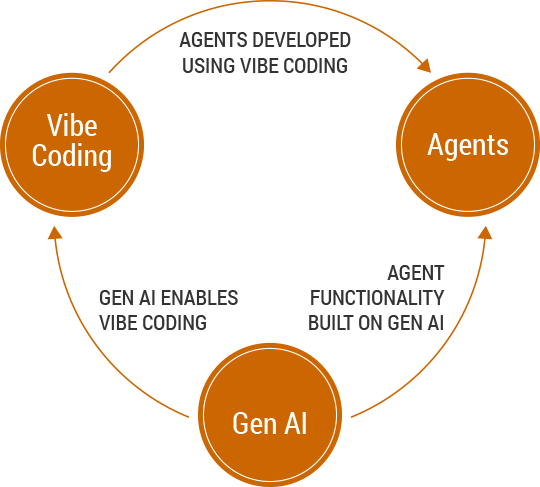
Pricing needs to become more granular, responsive and adaptive.
Granular: Agents generally perform a specific task, making it easier to apply value-based pricing and, in some cases, outcome-based pricing.
Responsive: Context is king. Pricing needs to respond to the context of the customer and the use case. One size fits all pricing models are dead.
Adaptive: Context is changing rapidly. Pricing that is set and forget or a frozen accident will cripple business models.
Generative Pricing
Ibbaka has pioneered a new approach to pricing to help our customers adapt to an agent-first world. We refer to this as generative pricing because it is specifically designed for applications and agents built with generative AI, leveraging it to achieve granular, dynamic, and responsive results.
Core Principles of Generative Pricing
Responsive: Prices adapt in real time to changes in product configuration. As generative AI applications are often composable and can be tailored instantly to user needs, pricing must keep pace, adjusting dynamically as features are added or removed.
Explainable: Transparency is central. Customers must be able to understand how prices are determined and why they change. This builds trust and helps users make informed decisions about their configurations.
Value-Based: Prices are set to reflect the actual economic value delivered to the customer, such as cost savings, efficiency gains, or revenue growth, rather than just usage or input/output metrics.
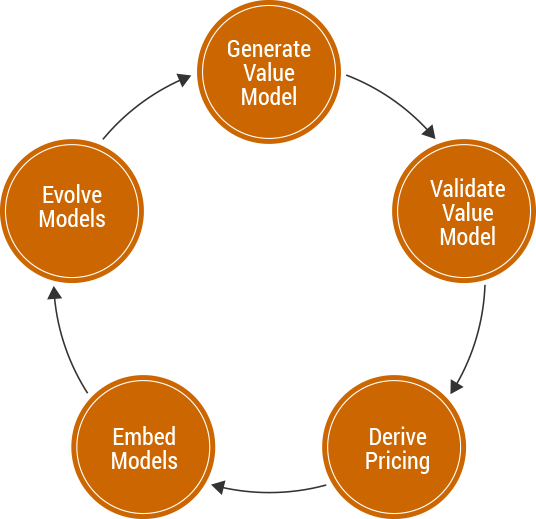
The Generative Pricing Cycle
Agent Packaging & Pricing Strategies
Four patterns have emerged in packaging and pricing generative AI-powered functionality.
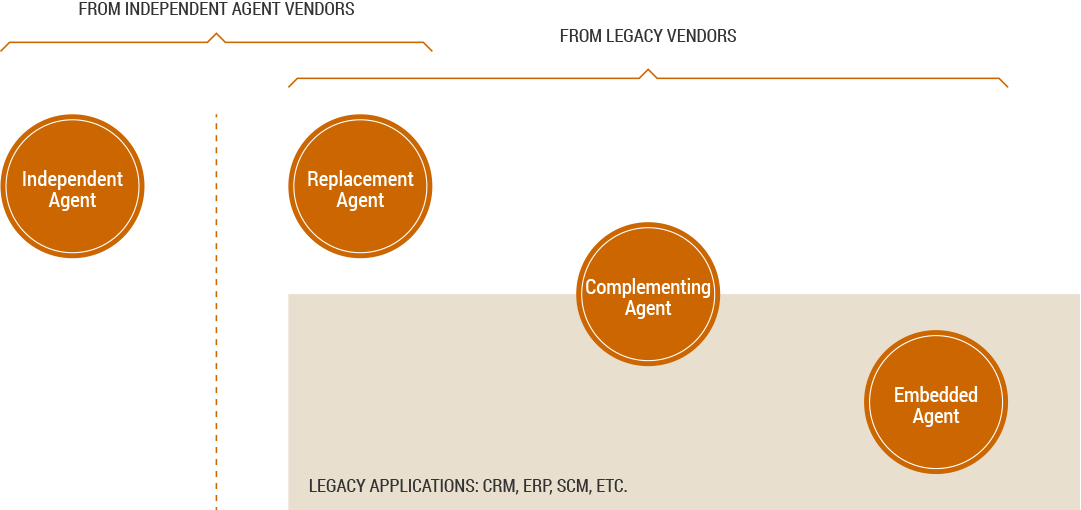
Independent Agents - these agents do not rely on any external application or data and can be used without integration into other applications.
The Price is based on the value providedReplacement Agents - enable new functionality or replace a key piece of functionality in an existing application, but require access to the underlying application.
The price is based on the increased value relative to the legacy app.Complementing Agents - make it easier to access or enhance some existing functionality.
Use the same pricing metrics as the underlying app.Embedded Agents - added inside the app as enhanced functionality.
Increase the price of the underlying app based on the additional value created.
Agent Pricing Decision Tree
1. Decide which of the four agent patterns fits. Your approach to pricing will depend on the pattern.

2. For an independent agent, begin by understanding the job that your agent does. That will inform how you price.
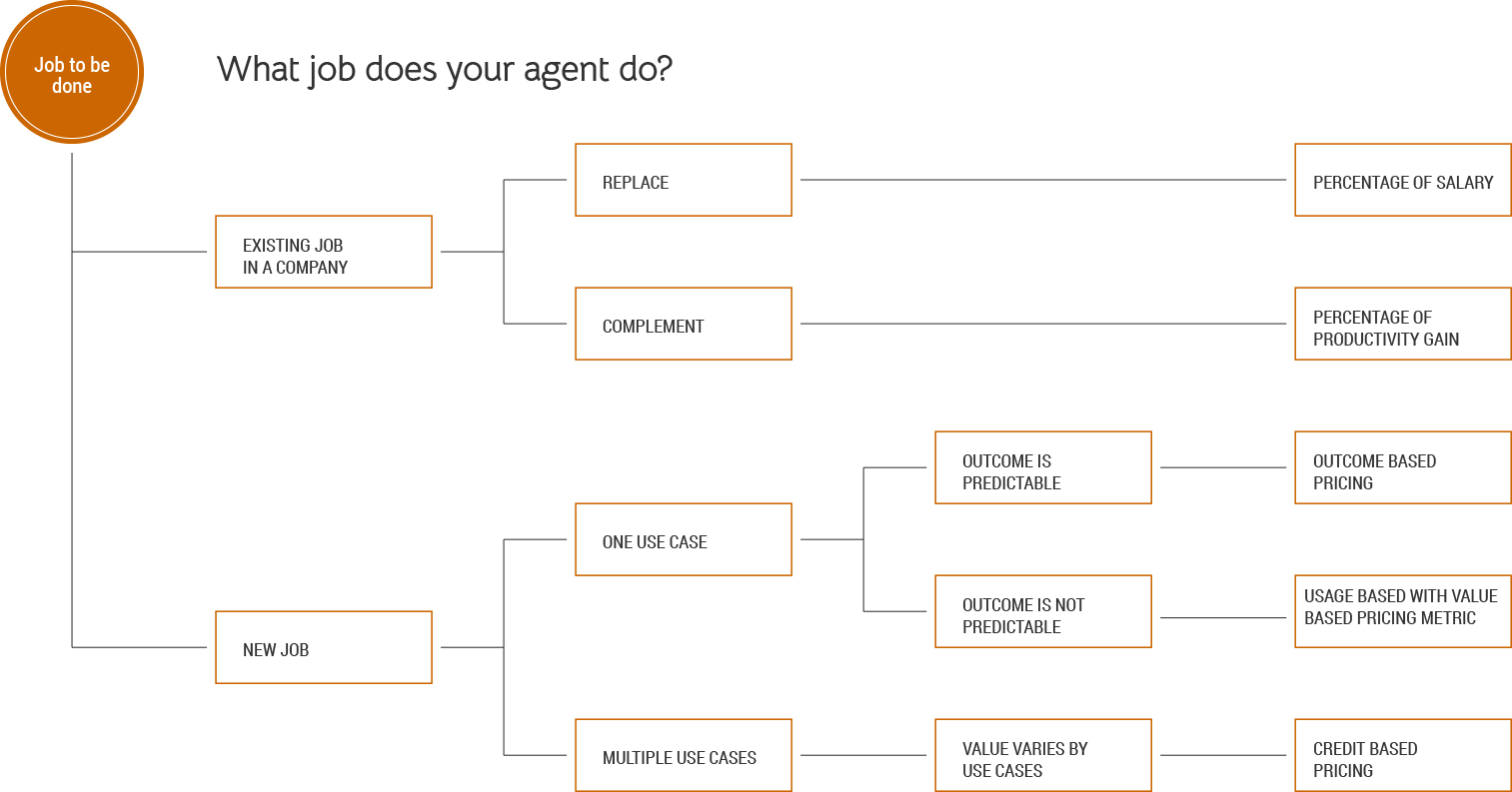
3. For a replacement agent, the key question is whether there are new value drivers.
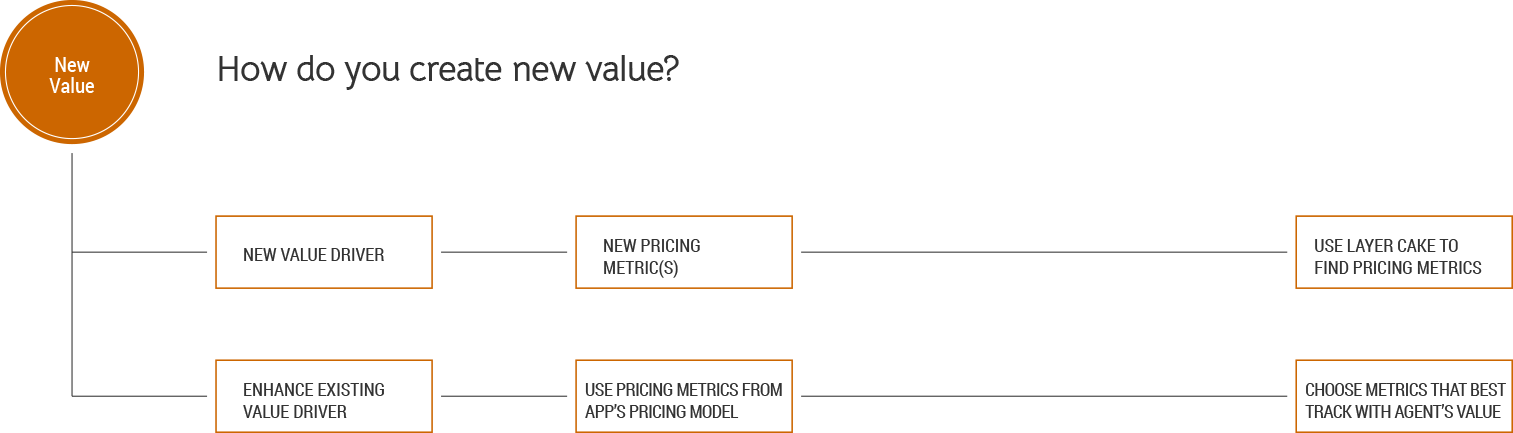
4. For a complementing agent, the value is closely related to that of the underlying application.
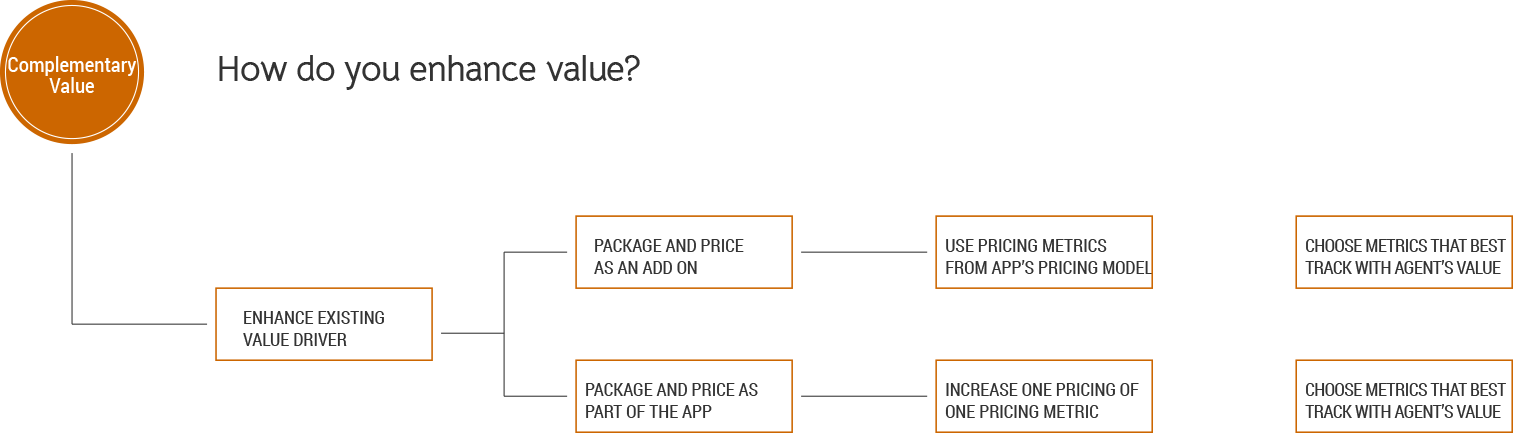
5. Embedded agents are not priced separately. When they increase value they can be used to increase overall pricing if they impact willingness to pay.
The Four Layers of the Agent Pricing Layer Cake
The Ibbaka Agent Pricing Layer Cake helps organize the different possible pricing metrics.
Role Layer: Job to be Done or Agent Type
Focuses on the core job or function the agent performs.
Pricing can be based on:
Type of agent (e.g., research assistant, customer service bot)
Level of specialization (basic, advanced, expert)
Industry application (e.g., healthcare, finance)
Feature/capability tiers
Sets baseline value and often underpins tiered pricing models.
Access Layer: Assured Access or Retainers
Charges for guaranteed access, reservation, or expense management.
Common for agents whose availability or response guarantees are critical.
May involve flat-rate retainers or minimum monthly commitments.
Usage Layer: How Often the Agent is Used
Reflects actual agent activity, often measured by:
Agent hours
Number of actions performed
Runs or workflows executed
Aligns price with consumption, balancing predictability and flexibility.
Outcome Layer: Results and Value Delivered
Pricing reflects the business outcomes achieved, such as:
Revenue generated or influenced
Cost savings
Productivity increases
Customer satisfaction improvement
Success rates or achievement of specific KPIs
Directly aligns cost to delivered value, but often requires robust measurement systems.
Why Use the Layer Cake Framework?
Balances Complexity and Effectiveness: Selects metrics tailored to customer value and willingness to pay.
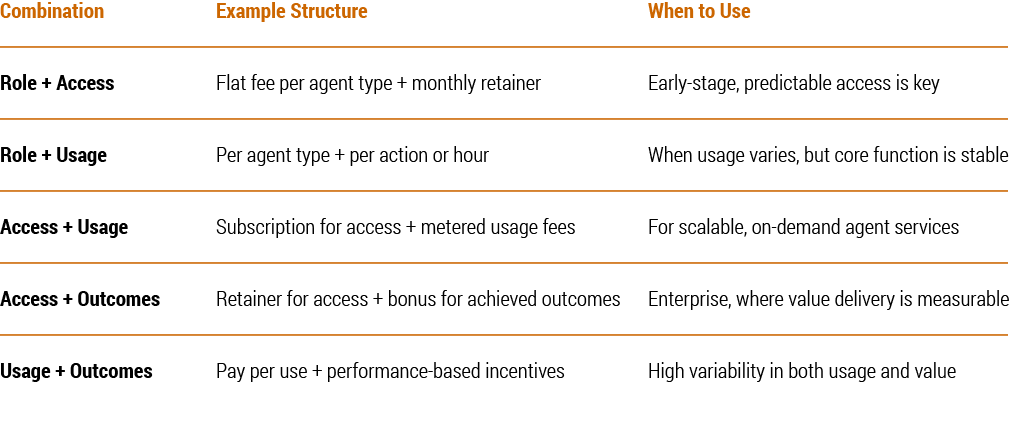
Enables Hybrid Pricing: Companies often combine layers (e.g., Role + Usage or Access + Outcome) to maximize value capture and customer fit.
Facilitates Value-Based Pricing: Aligns pricing more closely to the impact agents have on customers, supporting flexible and scalable models.
Maintains Value > Price > Cost Principle: Ensures that customers receive net value, companies retain margin, and both can succeed as the agent economy matures.
This framework is a best practice for organizations designing pricing for advanced AI agents, helping them craft clear, predictable, and value-driven offerings in a rapidly evolving space.
Combinations for Hybrid Pricing
The impact of vibe coding
Vibe coding uses prompt-driven interfaces to Large Language Models, enabling users to build apps and agents by simply describing what they want in natural language. Tools like Lovable, Replit, and Bolt are making software creation accessible, accelerating innovation and allowing more people to generate value through custom solutions.
How Vibe Coding Is Changing Pricing
Pricing can be embedded in the app: Developers can now build dynamic pricing directly into AI-driven applications, allowing for value-based and adaptive pricing aligned with user needs. (Ibbaka can show you how to do this)
Lower barriers drive focus on value: As development costs fall, success depends more on offering differentiated value, which influences both how products are positioned and priced.
Enabling Continuous Innovation: As developers and businesses iterate quickly using vibe coding, pricing needs to keep pace—becoming more flexible, responsive, and aligned with rapidly evolving customer needs and industry standards.
Vibe coding isn’t just a new way to build apps—it’s reshaping how value is created and captured in the software economy.
Generate a value model
Validate with interviews and synthetic data
Derive a pricing model
Embed pricing in the application or agent so that the value and pricing models receive connected data
Evolve the pricing based on the data gathered
